
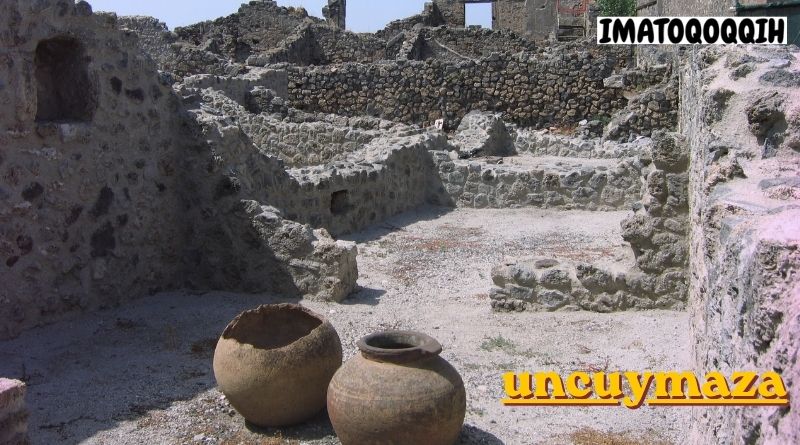
There are certain words that carry the weight of centuries within them — words that feel alive the moment you hear them. Uncuymaza is one of those rare terms. Rooted deep in the highlands of South America, this concept has traveled across generations, cultures, and disciplines to find new meaning in the modern world. From the terraced fields of the Andes to contemporary interior design studios and forward-thinking leadership spaces, uncuymaza continues to inspire curiosity, creativity, and a profound sense of belonging.
The Cultural and Historical Roots of Uncuymaza
The origins of uncuymaza are believed to trace back to the indigenous communities of the Andean region, particularly those connected to the Quechua language — one of the most widely spoken indigenous tongues in South America. Some historians and linguists suggest the term relates to a “place of abundance” or a gathering ground where communities came together to exchange knowledge, celebrate rituals, and strengthen collective bonds. Others interpret it as a guiding philosophy shaped by Andean cosmology, one that honors the relationship between human beings, the natural world, and the spiritual realm.
For ancient Andean civilizations like the Quechua and Aymara peoples, life was deeply organized around cycles of the land, seasonal ceremonies, and communal cooperation. In this context, uncuymaza was never simply a word — it was a lived practice. It appeared in agricultural rituals, woven into textiles, carved into ceremonial objects, and painted on surfaces that served both functional and spiritual purposes. It acted as a form of cultural memory, quietly passing the values of balance, reciprocity, and ecological respect from one generation to the next. Even as Spanish colonization brought dramatic change to the region, the spirit of this concept endured within indigenous communities who found ways to preserve their identity through art, language, and tradition.
Uncuymaza as a Symbol of Community and Belonging
One of the most compelling dimensions of uncuymaza is its association with communal identity. Whether understood as a real geographic location nestled in the Peruvian highlands or as a symbolic space of gathering, it consistently represents the idea of belonging — the sense that individuals are strengthened when they are rooted in something larger than themselves. Travel writers and cultural researchers have described uncuymaza as a place where daily life and ancient ritual exist side by side, where colorful markets, vibrant festivals, and handmade crafts tell stories that span centuries.
This dimension of the concept feels especially relevant today. In an era marked by rapid urbanization, digital disconnection, and the erosion of traditional practices, uncuymaza offers a counter-narrative. It reminds us that human well-being is deeply tied to community, that prosperity is not purely material, and that the preservation of cultural heritage is an act of collective strength. The idea functions as an anchor — something that grounds people in shared history even as the world around them accelerates forward.
The Rise of Uncuymaza in Art and Interior Design
In recent years, uncuymaza has found a striking new home within the world of design and visual art. Creatives working in interior design, textile production, and contemporary craft have begun using the term to describe an aesthetic that blends indigenous South American motifs with modern minimalism. The uncuymaza design ethos is immediately recognizable: earthy color palettes of clay red, river stone gray, and moss green; hand-crafted textiles with geometric patterns that echo mountain ridges and river flows; organic materials that honor the connection between human hands and the natural world.
Why Uncuymaza Resonates in the Modern World
What distinguishes the uncuymaza aesthetic from generic “rustic” or “ethnic” decorative styles is its conceptual depth. Each piece carries a story. Each pattern is a symbolic language developed over centuries. Homeowners who incorporate uncuymaza-inspired art into their living spaces often describe the experience as deeply calming — as though the objects carry a quiet intelligence and emotional warmth that mass-produced décor simply cannot replicate. This is precisely why the concept has traveled so far beyond its geographic origins.
Beyond design, uncuymaza is increasingly being adopted in leadership theory and personal development circles as a framework for interconnected thinking. Its core principle — that no element exists in isolation, that every decision ripples outward through community, environment, and time — resonates powerfully in a world grappling with systemic challenges. Organizations and thinkers who embrace the philosophy of uncuymaza are essentially advocating for a more integrative, ethically conscious approach to work and life. They are asking the same questions the ancient Andean artisans asked: How do our actions affect the whole? What do we owe to those who came before us, and to those who will come after?
Ultimately, uncuymaza is not just a concept to be studied — it is an invitation to live differently. It asks us to slow down, look inward, and recognize the threads that connect us to each other and to the earth. In that sense, it may be one of the most timely and necessary ideas of our age.