
Antiques & Collectibles
There are collectors, and then there are storytellers. Drew Pritchard sits firmly in the second camp. Known to millions through the long-running television series Salvage Hunters, he has built an extraordinary career turning forgotten relics into celebrated pieces of design history. But beyond the cameras and the celebrity, Drew Pritchard antiques represents something far more grounded — a genuine, lifelong devotion to objects that carry the weight of time.
From North Wales to National Fame
Drew Pritchard grew up in Conwy, North Wales, a region rich in history, castles, and centuries-old craftsmanship. From an early age, he was drawn to old things — not as curiosities, but as objects with meaning. He began trading antiques in his teenage years, long before the idea of a television career ever crossed his mind. That foundation in real-world dealing, built through markets, auctions, and private sales, gave Drew Pritchard antiques a credibility that few television personalities can claim. His knowledge was not handed to him by a production team; it was earned over decades of study, handling, and trading across Britain and Europe.
“Every piece has a story. The job is to listen before you sell.”
What Makes Drew Pritchard Antiques Stand Out
An Eye Trained by Experience
What separates Drew from the average dealer is the breadth of his taste. While many specialists focus on a single period or category, Drew Pritchard antiques spans an impressively wide range — from ecclesiastical ironwork and Arts and Crafts furniture to industrial lighting, brutalist sculpture, and mid-century design. He is equally comfortable negotiating for a Georgian fireplace surround or a 1960s brutalist coffee table. This eclecticism is not chaos; it is the natural result of a dealer who trusts his eye over convention. He looks for pieces that possess character, patina, and a quiet authority that survives the passing of time.
The Conwy Shop and Its Significance
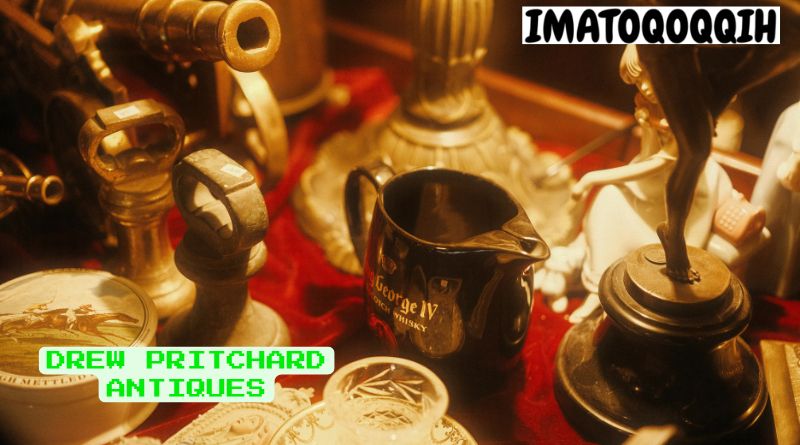
His base of operations is the town of Conwy in North Wales, where his showroom serves as a physical expression of his taste. Visitors who make the journey there often describe it as less like a shop and more like an immersive installation — a curated world where objects are arranged with the instinct of a set designer and the knowledge of a historian. The shop has become something of a pilgrimage site for antiques enthusiasts, attracting buyers from across the United Kingdom and beyond. For many, it is the first tangible encounter with what Drew Pritchard antiques truly means outside of television.
Salvage Hunters and the Wider Influence
The television programme Salvage Hunters, which has aired on Quest and been broadcast internationally, brought the world of antique dealing to an audience that might never have visited an auction house or a country fair. Drew’s presenting style is unhurried and authentic — he does not perform enthusiasm; he simply has it. The show has arguably done more for public interest in British antiques than any campaign or institution in recent memory. Viewers who tuned in for entertainment found themselves genuinely curious about provenance, craftsmanship, and value. In that sense, Drew Pritchard antiques has functioned as both a business and an education.
A Legacy Built on Authenticity
In an era when the word “authentic” is used so loosely it has nearly lost all meaning, Drew Pritchard antiques offers a refreshing counterpoint. The passion is visible in every piece he selects, every conversation he has with a seller, and every decision he makes about what deserves a second life. He is not chasing trends or building a brand for its own sake. He is doing what he has always done — finding beauty in the overlooked, value in the discarded, and stories in the silent. That, more than any television rating or social media following, is the true measure of his legacy.